You earn money. You spend money. But do you actually know where it all goes? Most people don't — and that's the number one reason budgets fail.
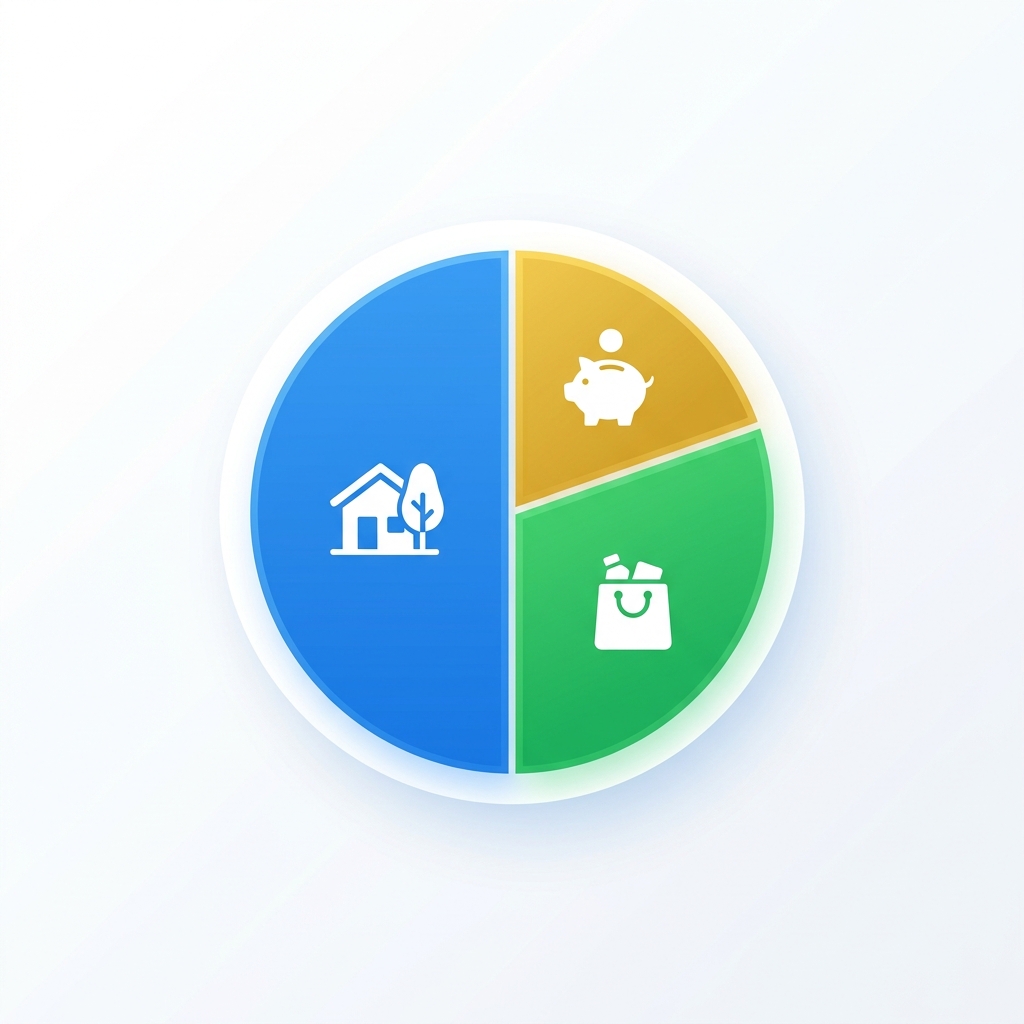
The 50/30/20 rule fixes that problem. It's the simplest budgeting framework ever created, and it works because it doesn't ask you to track every single coffee purchase. Instead, it splits your take-home pay into three buckets: needs, wants, and savings.
Here's how to set it up in under 10 minutes — and why it might be the only budget you'll ever stick to.
How the 50/30/20 Rule Works
Take your monthly after-tax income (what hits your bank account) and divide it like this:
| Category | % of Income | What It Covers |
|---|---|---|
| Needs | 50% | Rent, groceries, utilities, insurance, minimum debt payments |
| Wants | 30% | Dining out, streaming, hobbies, travel, shopping |
| Savings & Debt | 20% | Emergency fund, retirement, investments, extra debt payments |
That's it. Three numbers. No spreadsheet with 47 categories. No guilt about buying a latte.
Real Example: $5,000 Monthly Take-Home
Let's say you bring home $5,000 per month after taxes. Here's what your 50/30/20 budget looks like:
| Category | Budget | Typical Breakdown |
|---|---|---|
| Needs (50%) | $2,500 | Rent $1,400 + Groceries $400 + Car payment $300 + Insurance $250 + Utilities $150 |
| Wants (30%) | $1,500 | Dining out $300 + Streaming $50 + Gym $50 + Shopping $400 + Travel fund $400 + Entertainment $300 |
| Savings (20%) | $1,000 | Emergency fund $400 + 401(k) $400 + Extra on student loan $200 |
What this means for you: If you're saving $1,000 a month, that's $12,000 a year — enough to build a solid emergency fund in 6 months and still invest for retirement. Use our Savings Goal Calculator to see exactly when you'll hit your target.
Step-by-Step: Set Up Your 50/30/20 Budget
Step 1: Calculate Your After-Tax Income
Look at your last paycheck. Your net pay (after taxes and deductions) is your starting number. If you're self-employed, take your gross income minus estimated taxes.
Not sure about your take-home? Plug your salary into our Tax Calculator to get your net income.
Step 2: List Your "Needs"
These are expenses you literally can't avoid:
- 🏠 Housing — rent or mortgage (including property tax and insurance)
- 🛒 Groceries — food you cook at home (not restaurants)
- ⚡ Utilities — electricity, water, gas, internet
- 🚗 Transportation — car payment, gas, public transit
- 🏥 Insurance — health, auto, renter's/homeowner's
- 💳 Minimum debt payments — student loans, credit cards, car loans
Pro tip: If your needs exceed 50%, you likely need to reduce housing costs or find cheaper insurance. This is the hardest category to cut — but also the one that makes the biggest difference.
Step 3: Identify Your "Wants"
Wants are things you enjoy but could survive without:
- 🍽️ Restaurants and takeout
- 📺 Netflix, Spotify, subscriptions
- 🏋️ Gym memberships
- ✈️ Travel and vacations
- 🛍️ Clothes, gadgets, non-essential shopping
- 🎮 Gaming, concerts, entertainment
The line between "need" and "want" can get blurry. A phone is a need. The latest iPhone Pro Max is a want. Basic internet is a need. The premium 1Gbps plan might be a want.
Step 4: Automate Your Savings
The 20% savings bucket is where the magic happens. Set up automatic transfers on payday so you never have to think about it:
- 💰 Emergency fund first — aim for 3-6 months of expenses. Use our Savings Calculator to set a target.
- 📈 Retirement next — maximize your 401(k) match, then add to an IRA. See how your money grows with our Retirement Calculator.
- 💳 Extra debt payments — throw the rest at your highest-interest debt. Our Loan Calculator shows exactly how much interest you'll save.
When the 50/30/20 Rule Doesn't Work
Let's be honest. This rule was created when housing was affordable. In 2026, many people spend 40-60% of their income on rent alone. If that's you, here are adjusted versions:
| Your Situation | Adjusted Split | Why It Works |
|---|---|---|
| High-cost city (NYC, SF, LA) | 60/20/20 | Accepts higher needs, cuts wants by 10% |
| Aggressive debt payoff | 50/20/30 | Shifts 10% from wants to extra debt payments |
| Low income, building savings | 70/20/10 | Focuses on basics while saving even a small amount |
| High earner, FIRE goal | 30/20/50 | Maximizes savings and investments |
The point isn't hitting exactly 50/30/20. The point is having a framework — any framework — that forces you to allocate money intentionally instead of wondering where it all went.
50/30/20 vs Other Budget Methods
| Method | Difficulty | Best For | Drawback |
|---|---|---|---|
| 50/30/20 | Easy | Most people — simple, flexible | May not work in high-cost areas |
| Zero-based | Hard | Detail-oriented people | Every dollar assigned — tedious to maintain |
| Envelope system | Medium | Overspenders who need physical limits | Impractical for digital payments |
| Pay yourself first | Easy | People who only care about savings rate | No structure for spending categories |
Frequently Asked Questions
Does the 50/30/20 rule use gross or net income?
Net income — your take-home pay after taxes and mandatory deductions. If you contribute to a 401(k) through payroll, you can include that as part of your 20% savings.
What if my rent alone is more than 50% of my income?
Adjust the percentages. A 60/20/20 or even 70/20/10 split is perfectly fine as a starting point. The key is to save something consistently, even if it's only 10%.
Where do student loan payments go — needs or savings?
Minimum payments go in "needs" (they're mandatory). Any extra payments beyond the minimum go in "savings/debt repayment." Use our Student Loan Calculator to see how extra payments shorten your payoff date.
Is the 50/30/20 rule good for high earners?
It's a starting point, but high earners should aim to save more than 20%. Once your needs are met, shift extra income to investments rather than inflating your "wants" category. A 30/20/50 split lets you build wealth faster.
How do I track my spending?
You don't need to track every dollar. Just review your bank statement once a month and sort transactions into three columns: needs, wants, savings. If any category is way off, adjust next month.